The Pain that Temples are Made From
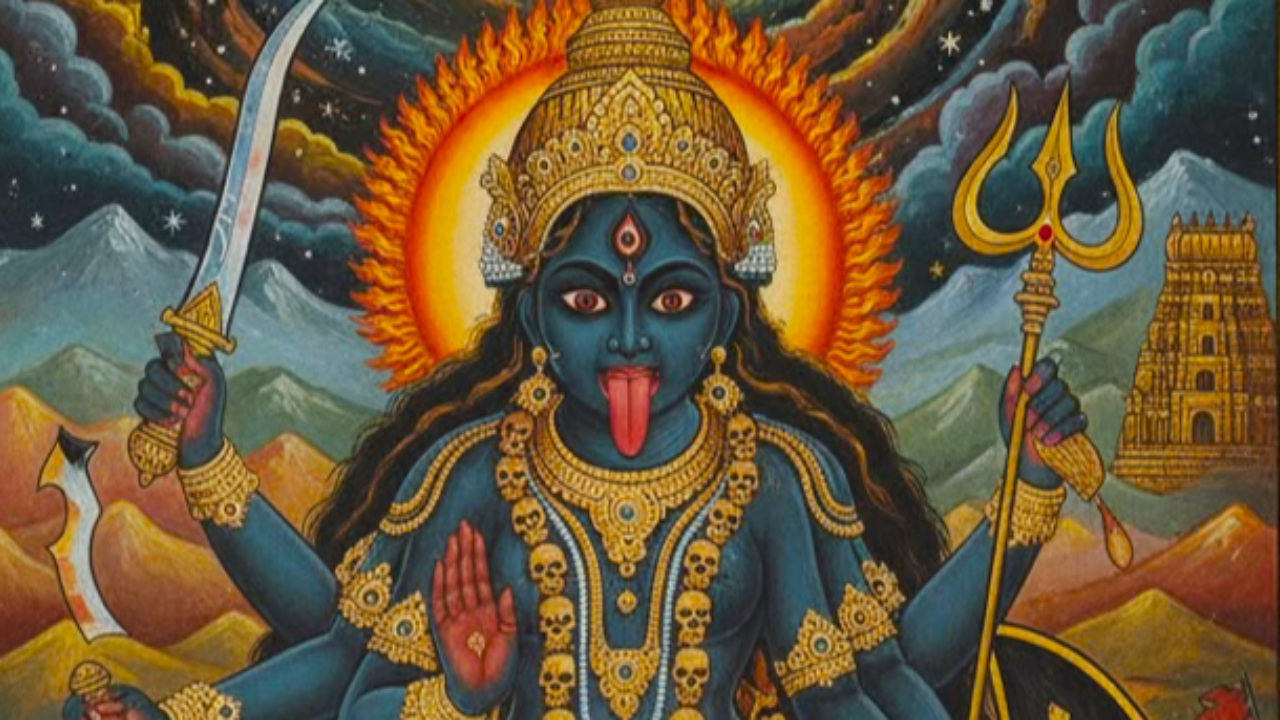
This month has kicked off with headlines that feel like a gut kick. Once again, women are at the center of wretched abuse, violence, scrutiny, and abject disregard. According to statistics, 91% of sexual assault victims are women, and 1 out of 2 women will experience some form of sexual abuse in their lifetime.
So my question is, “Are we angry enough?”
Everything in life, everything that comes into form, begins first in consciousness. Throughout history, we have had the lessons; we have had so many opportunities to grow, change, and shift the collective consciousness toward honoring women and protecting them, in recognition of their importance in creating balance, harmony, and wisdom in society.
As a devotee of Science of Mind and Kashmir Shaivism, I turn again and again to the wisdom of ancient stories. The story that rings most true right now for me is the story of Shiva and Sati, the great love story of the Divine Masculine and the Divine Feminine. I’ve shared this story before…yet this time I ask you, the reader, to see yourself in the characters, to explore the root cause of dismantling the sacred, and use it as a map to explore anger, grief, rage, and the importance of temples.
The story goes…
Daksha, a very proud and wealthy man, the son of Brahma, god of creation, had a fabulous and wealthy kingdom and a beautiful wife, Prasuti. He lived lavishly and abundantly in his kingdom. For many, many years, Daksha and Prasuti had desired another daughter, and steadfastly Daksha made offerings to the gods and was a dedicated devotee to the goddess, Shri. Many years passed, and still, they did not have another daughter, but Daksha remained devoted. One day he went deep into the forest and performed a heartfelt puja. The goddess found him to be so sincere and told Daksha that she herself would be born to them with one condition. Daksha was stunned; he would be a father to the goddess. He was absolutely giddy with delight and asked what the condition of the birth would be. Shri told him that if he ever forgot who she really was or offended her in any way, then she would leave this world and never see him again. Daksha agreed and, with delight, returned to his palace to share the wonderful news with Prasuti.
As the goddess promised, Prasuti gave birth to a beautiful baby girl, and her name was Sati. Sati grew into a beautiful young woman and was like a priceless jewel to her father. He adored her and showered her with affection. As it came time for Sati to marry, Daksha rebuked every suitor; princes and gods alike were not good enough for Sati. He became very arrogant and demeaning to anyone who might pursue her. She was actually secretly pleased that her father found no one suitable for her, as it gave her more time to study and explore spiritual practices in the lush forests that surrounded the palace.
One day while sitting quietly in meditation, deep in the forest at the foot of Mt. Kalish, Sati caught a glimpse of Shiva. She saw his wild matted hair and the animal skins he wore, she watched him as he sat for endless hours of meditation never stirring or opening his eyes. She decided as she gazed at him that she would marry him and spent days visiting the forest and trying to get his attention. She herself sat for hours in meditation and in devotion to Shiva hoping that one day he would notice her. That one day arrived as she sat in awareness only of him, and suddenly her pure love and devotion awakened him; he opened his eyes and at that very moment, fell deeply in love with Sati. He came down from Mt. Kalish and, for the first time, together with Sati, explored the forests, the rivers, and the mountains of the earth through love. It was a divine union of consciousness and matter. Recognizing that they were one, known as Ardhanarishvara, they were wed.
Sati was so thrilled she ran back to the palace to share her news. Shiva was Adi-Yogi, the supreme Yogi, and she imagined her father too would be ecstatic about their marriage. To her shock, Daksha rebuked her. He stormed about, speaking horribly, cursing at Shiva, and vowing that he would never acknowledge their marriage.
Sati left the palace heartbroken and returned to her beloved Shiva. Her heartache slowly turned to anger, and while anger brewed in Sati, Shiva remained sanguine, eyes closed, in a deep state of meditation. Soon after, Sati heard news that her father was hosting an extravagant gathering for all the gods and goddesses and was planning a Yagna, an elaborate and powerful fire ceremony. Sati was now beside herself, when she found out that she and Shiva were not invited. They had been excluded; it was humiliating. After all, she was the most powerful goddess, and he was the most supreme god. She begged Shiva to come out of meditation and accompany her to the palace to confront her father, yet he, in blissful meditation, could not be roused.
Sati arrived at the palace and upon seeing her, Daksha worked himself into an arrogant affront; he dishonored her and Shiva in front of the other gods and goddesses. He laughed at her and mocked her while ridiculing Shiva for having no palace and no kingdom. Sati, unable to take any more of his insults, stood in front of the fire and shapeshifted into a terrifying form of the goddess she was. Daksha, witnessing her transformation, stood trembling in fear as he suddenly recalled the condition the goddess had given him upon her birth. All the gods and goddesses around her were shocked and stunned into silence. As the full effulgence of her supreme power became evident, she joined the flames of the fire and ascended into nothingness, leaving her charred body behind.
Virabhadra, Shiva's devoted friend, quickly ran to Mt. Kalish to tell him what had happened: that his beloved Sati had thrown herself into the sacrificial fire. Upon hearing the devastating news, Shiva flew into a rage and made his way down the mountain through the forest to the Palace. When he arrived, he was out of his mind with anger and grief. He began to move in a fiery dance, a Tandava, a dance that is the very source of the cycle of creation, preservation, and dissolution.
As Nataraja, in this fiery Tandava, Shiva begins the dissolution of everything around him, and in his fury, he dismembers those around him and beheads Daksha, he is wild with anger and is out of control...until finally, after all the destruction and loss of life, he is breathless and the Tandava gradually slows. Recognizing what he has done, Shiva is overcome with regret for the suffering he has caused. He replaces Daksha's head with the head of a goat, and Daksha, forever grateful just to be alive, now recognizes the full power of Shiva and falls at his feet.
Shiva stands in the center of the flames and lifts Sati's charred body from them. He gently places her upon his back and begins to walk the earth in grief.
As time does in these great stories, it passes, and Shiva has covered the earth in his sorrow. Not far behind him is Vishnu, the god of sustainment. Vishnu follows, his heart aching with empathy for Shiva, witnessing the heaviness of his burden of grief, and, without Shiva knowing it, gently cuts away parts of Sati's body, leaving her limbs on the earth.
The ground where parts of Sati’s body lay became sacred ground and sites for Sacred temples of the Divine Feminine. These 51 temples, or Shakti Peethas are sacred, flourishing pilgrimage sites still visited throughout India today.
Shiva, taking the form of Bhairava, his fiercest form, is often seen guarding the gates of these temples as the terrifying protector of women and protector of the goddess, his beloved Sati.
As we arrive at the end of the story, more time has passed, as it does, and Sati is resurrected as Parvati, and she once again marries Shiva and takes her place as his beloved on Mt. Kailash for eternity. God and Goddess in the divine union of consciousness and the energy of matter.
This ancient story parallels the effects of today. Daksha, the greedy king who cannot have enough, is blessed with a beautiful daughter, with only one condition: do not disrespect the goddess. But Daksha forgets; he becomes separate from his agreement and his consciousness fails him. Once so dutifully devoted to the goddess through prayer and ritual, he now, through disconnect and ego, has lost the very thing he prayed for: Sati.
Shiva’s rage at Daksha was warranted; he deserved it. And yet, in the aftermath, in forgiveness and remorse, he brought Daksha back to life. It shouldn’t be missed that Shiva replaces Daksha’s head with the head of a goat. The goat head tells us that Daksha would not remain the same; he would have a new consciousness, and he would reenter life with humility and compassion. In his new consciousness, he can see that it was his own actions that created the effect he now would live with day in and day out. Daksha, with his goat head, was transformed. You don’t put new wine into old skins.
Shiva suffered the heartbreaking loss of Sati, his grief seemingly unbearable. When Vishnu released him fully of his burden, he channelled his anger resourcefully, shapeshifting into Bhairava, the terrifying, fearsome aspect of Shiva that protects the temples of the goddess.
There will always be Dakshas. There will always be those who mistake power for entitlement, who turn sacred things into instruments of their own ego. Our task is to metaphorically remove their heads—to dismantle the ego, the arrogance, and the blindness that allows suffering to continue unchecked. Nothing will change unless consciousness is changed.
So perhaps Bhairava is not asking us to become more rage-filled and angry; perhaps he is asking us to become more courageous. To protect what is sacred. To protect one another. To protect our temples—both the physical ones and the temples within our own consciousness.
We can let our grief become devotion. And let our consciousness become a place where injustice does not get comfortable.
While we can only truly transform what lives within our own consciousness—our beliefs, our fears, our barriers—there comes a tipping point when individual awakening becomes collective consciousness.
That is where our work lands.
We keep choosing to know that wisdom prevails and transformation is inevitable. We have to know in our bones that justice is something natural, necessary, and possible.
Our anger becomes the fire that fuels the possibility of transformation.
And we stand together in fierce love and devotion as protectors of the temples made by pain.
Let's Stay Connected
Your email information is never shared
